
Sibling Name Sets in Mythology
Mythology is full of sibling groups whose names have traveled across centuries because they sound memorable and carry strong stories. Some pairs feel graceful and balanced, while others are dramatic, heroic, or mysterious. For parents, writers, and name lovers, mythological sibling sets can offer inspiration that is deeper than a simple list of names. Looking at these sets also reveals how cultures imagined family, power, loyalty, rivalry, and destiny through names that still feel vivid today.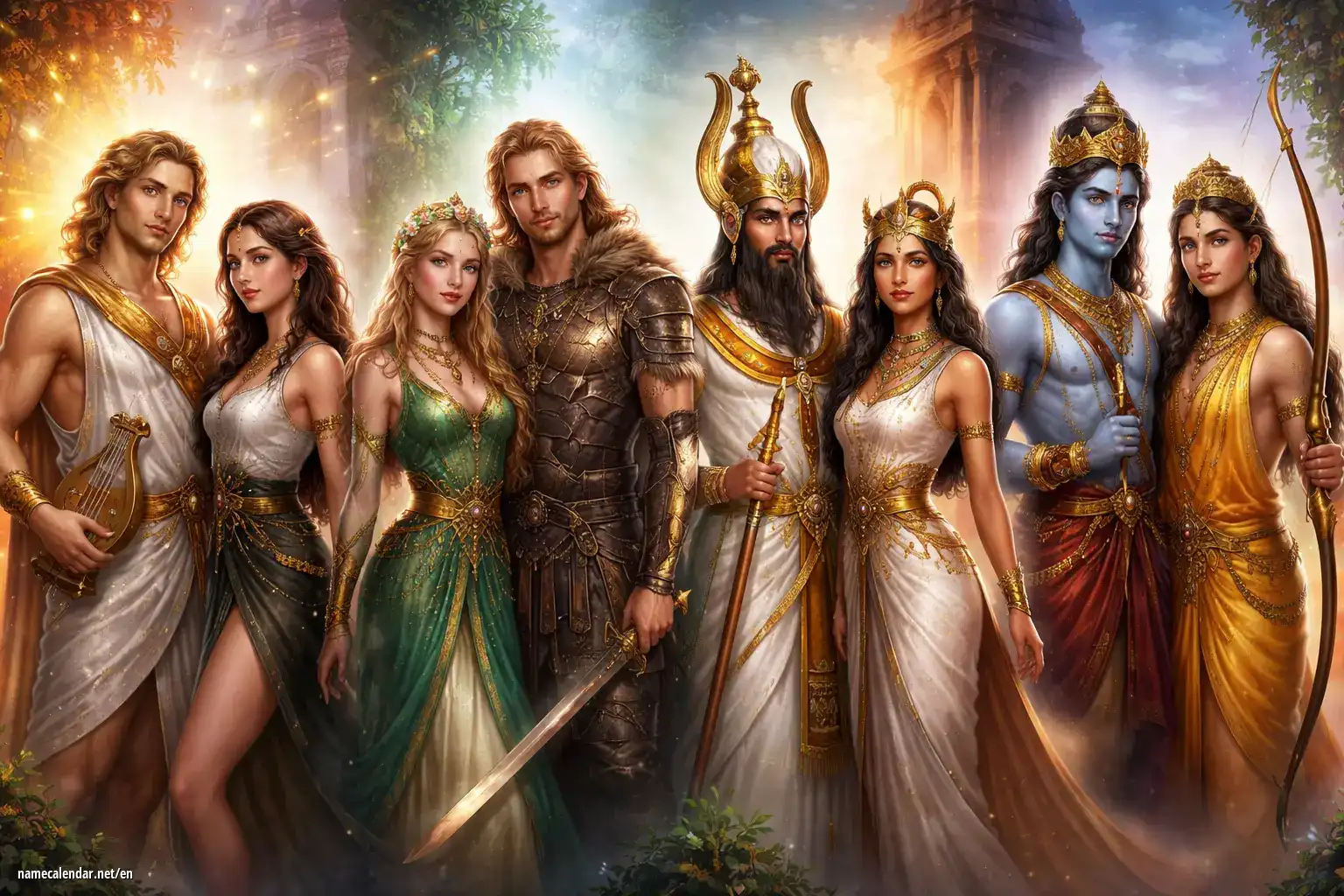
Why mythological sibling names work so well together
Sibling names from mythology often feel naturally connected because they were created inside the same cultural world. A pair such as Apollo and Artemis shares rhythm, prestige, and a clear thematic link, yet each name keeps its own identity. This balance matters when people look for names that match without becoming too similar.Another strength is that these names usually come with built in character. Isis can suggest devotion and wisdom, while Osiris carries ideas of kingship and rebirth. Freya feels luminous and elegant, while Freyr feels warm and fertile. In each case, the names belong together, but they do not repeat the same energy.
Mythological sets can also suit different naming styles. Some families like bold and recognizable names such as Thor or Diana. Others prefer names that feel softer or rarer, such as Brigid, Nephthys, or Idun. Mythology offers both the famous and the unexpected, which makes it especially useful when choosing names for siblings.
Greek mythology sibling sets
Apollo and Artemis
Apollo and Artemis are one of the best known sibling sets in mythology, and they remain one of the strongest for modern name inspiration. Apollo is associated with light, music, prophecy, healing, and refinement. The name feels bright, artistic, and noble. Artemis, his twin sister, is linked with the moon, wilderness, hunting, and independence. Her name carries cool strength and a clear, modern sound despite its ancient roots.Together, Apollo and Artemis create a highly balanced set because each name is distinct in tone. One feels solar and expressive, the other lunar and self possessed. The contrast is appealing, but the shared origin keeps them connected. For a brother and sister set, they are among the most elegant choices in mythology.
Castor and Pollux
Castor and Pollux come from the story of the divine twins known for loyalty and brotherhood. Castor feels crisp and classical, with a structure that is easy to pronounce in many languages. Pollux is rarer and more unusual, which gives it a striking mythic edge. The pair is strongly linked to the stars through the constellation Gemini, adding a cosmic layer to the names.This set suits people who want sibling names with a clear ancient source and a masculine, heroic quality. Castor is easier for everyday use, while Pollux appeals more to those who like bold and uncommon choices. As a pair, they express closeness, bravery, and the idea of brothers standing together.
Ares, Hebe, and Eileithyia
The children of Zeus and Hera include several names that can inspire sibling groupings. Ares is the god of war, so the name feels forceful, sharp, and dramatic. Hebe is associated with youth and vitality, and her name feels lighter, softer, and surprisingly wearable today. Eileithyia, linked with childbirth, is much rarer and more elaborate, making it a more literary or daring choice.What makes this set interesting is the wide emotional range. Ares brings bold energy, Hebe brings freshness, and Eileithyia brings ceremonial beauty. Families may not use all three together, but even a pair such as Ares and Hebe shows how Greek mythology can provide names with different textures inside one family line.
Persephone and Arion
In some traditions, Persephone and Arion are counted among the children of Demeter. Persephone has become especially popular because it sounds grand, feminine, and mysterious. It carries associations with spring, the underworld, and cyclical renewal. Arion is rarer and lighter, with a musical, flowing quality that makes it attractive for those who want a mythological name that is less expected.This set works well for people drawn to names that feel poetic rather than bluntly heroic. Persephone has strong narrative power, while Arion offers softness and rarity. Together, they create a sibling set that feels refined and slightly enchanted.
Roman mythological parallels and adaptations
Diana and Apollo
Roman mythology often adapted Greek figures, but the Roman names developed their own identity in naming culture. Diana is the Roman counterpart of Artemis, and it has long been one of the most familiar mythological names in modern life. The name feels classic, graceful, and strong without seeming difficult. Paired with Apollo, it creates a sibling set that is both ancient and stylish.This combination can be easier to use than Apollo and Artemis for families who want one widely familiar feminine name and one bolder masculine name. Diana brings elegance and history, while Apollo adds radiance and artistic depth.
Romulus and Remus
Romulus and Remus are legendary brothers at the foundation of Rome. The names are inseparable from ideas of origin, conflict, ambition, and state building. Romulus sounds grand and imperial, while Remus is shorter, darker, and slightly softer. Together they create one of the most dramatic brother sets in mythic tradition.These names are less common for modern children, but they are rich in symbolic power. For fictional characters, themed projects, or people who appreciate bold classical naming, Romulus and Remus stand out immediately. They also show that sibling sets in mythology are not always harmonious. Sometimes the names carry the memory of rivalry as much as kinship.
Egyptian mythology sibling sets
Isis, Osiris, Set, and Nephthys
Egyptian mythology offers one of the most famous sibling groups in world tradition. Isis is often seen as the most enduring of these names. It suggests devotion, intelligence, magic, and queenship. Osiris carries a stately tone and associations with rule, death, and renewal. Set is short, sharp, and powerful, tied to chaos, storms, and disruption. Nephthys has a dark, elegant sound and is linked with protection, mourning, and hidden strength.As a full set, these names tell a complete myth of family loyalty, jealousy, restoration, and sacred power. In modern naming, Isis and Osiris may appeal to those who want regal names with deep symbolism. Nephthys suits lovers of unusual feminine names, while Set works more as a mythological reference than a common everyday choice. The group is especially appealing because every name has a distinct role and mood.
Horus and Anubis as related mythic alternatives
Although not a classic sibling pair in the same way, people drawn to Egyptian naming often explore related sets around the family of Isis and Osiris. Horus feels bold, celestial, and kingly, while Anubis carries a darker, more mysterious tone linked with burial and guardianship. These names show how one mythological tradition can guide sibling style even when a family does not choose an exact sibling pair from one story.For name inspiration, Egyptian mythology is valuable because its names are highly visual. They evoke temples, stars, deserts, royal imagery, and sacred ritual. That makes them memorable, especially for people looking beyond the most common Greco Roman choices.
Norse mythology sibling sets
Freya and Freyr
Freya and Freyr are one of the most attractive sibling pairs in Norse mythology because the names are clearly related without being identical. Freya has become especially popular in modern naming thanks to its soft sound and luminous image. She is associated with beauty, love, magic, and noble power. Freyr is tied to peace, fertility, prosperity, and good harvest, giving the name a warm and generous meaning.This is a strong brother and sister set for families who like Scandinavian or northern sounding names. Freya is instantly accessible, while Freyr feels more uncommon but still simple. Together they sound harmonious, and their shared mythic background makes the pairing feel complete.
Baldr and Hodr
Baldr and Hodr represent a more tragic sibling set. Baldr is associated with light, beauty, and purity, and the name feels noble and bright. Hodr is darker and more severe, carrying the weight of one of the central tragedies in Norse myth. The names form a dramatic contrast that reflects how mythology often uses siblings to express fate and irreversible conflict.As modern inspiration, Baldr may appeal more readily than Hodr, but the pair is still fascinating from a literary and thematic point of view. It shows that sibling sets can be compelling not only because they sound matched, but because they embody opposites within one family story.
Thor and Loki as a modern myth inspired pairing
Strictly speaking, Thor and Loki are not a sibling pair in traditional myth, but modern audiences often think of them together because of adaptation and popular culture. For true sibling naming, Norse mythology offers better historical examples. Still, the popularity of names such as Thor, Freya, and Idun shows that Norse myth has entered everyday naming in a major way.Among those choices, exact sibling sets such as Freya and Freyr remain the strongest because they carry authentic kinship as well as balanced sound.
Hindu mythology and epic sibling sets
Rama, Lakshmana, Bharata, and Shatrughna
The royal brothers of the Ramayana form one of the richest sibling groups in world mythology and sacred epic. Rama is calm, noble, and deeply respected, with a name that feels simple and strong. Lakshmana carries loyalty and devotion, since he is remembered as the brother who remains steadfast beside Rama. Bharata expresses duty, humility, and moral seriousness, while Shatrughna is less commonly discussed but still part of the complete brotherhood.This group is powerful because each name represents a different model of character inside one family. Rather than sounding identical, the names reflect distinct virtues. Families inspired by these names often value moral resonance as much as style. Even a pair such as Rama and Lakshmana immediately suggests brotherhood, faithfulness, and shared destiny.
Krishna and Balarama
Krishna and Balarama create another important sibling set. Krishna is one of the most beloved names in Hindu tradition, associated with joy, divine love, wisdom, and playfulness. Balarama feels steady, powerful, and grounded, with a name that suggests physical strength and elder brother protection.The appeal of this pairing lies in complementarity. Krishna feels musical and radiant, while Balarama feels broad and dependable. Together they offer a sibling set that combines affection, divinity, and heroic presence. For name lovers, they also show how mythology can preserve sibling relationships through very different personal styles.
Yama and Yami
Yama and Yami are an especially striking pair because the names are closely linked in sound. Yama is associated with death, justice, and order, while Yami is tied with life, kinship, and ancient creation themes. Their names are compact, memorable, and balanced, making them an excellent example of mythological symmetry.This set can appeal to those who like minimalist names with strong symbolism. It also illustrates a pattern found in many mythologies: sibling names are often designed to feel like reflections, mirrors, or cosmic counterparts.
Celtic and Irish mythological sibling inspiration
Brigid and related divine family names
Celtic mythology can be more fluid than Greek or Norse mythology, but it still offers strong sibling style through divine family connections. Brigid is one of the most appealing names from this tradition. She is associated with poetry, healing, craft, and sacred fire, so the name feels warm, intelligent, and enduring. In mythic family groupings, Brigid can pair well with names such as Aengus or Cermait, depending on which cycle of tradition one explores.What stands out in Celtic naming is atmosphere. Names from this world often feel lyrical, old, and intimate. They may require more explanation than names such as Apollo or Freya, but that can be part of their charm. For people seeking sibling names with a quieter mythic feeling, this tradition offers excellent possibilities.
Aengus and Brigid as a style pairing
While not the most formal sibling pair in mythology, Aengus and Brigid show how mythological naming can be guided by a shared world rather than one exact family tree. Aengus is tied to youth, love, and poetic beauty. Brigid carries wisdom, craft, and sacred presence. Together, the names feel artistic and distinctly Celtic.This kind of pairing is useful for modern naming because many people want a shared theme without choosing names that are too obviously matched. Mythology makes room for both strict sibling sets and wider family inspired combinations.
Mythological siblings shaped by contrast
One reason sibling sets in mythology remain so compelling is that they often reveal contrast instead of sameness. Apollo and Artemis differ in atmosphere even though they are twins. Baldr and Hodr represent light and darkness. Isis and Set belong to the same family but stand for radically different forces. This tension gives the names dramatic life.For modern naming, contrast can be an advantage. Two sibling names do not need identical sounds to feel right together. In fact, myth often suggests the opposite. The best sets usually have a clear shared background and two distinct personalities. A pair such as Freya and Freyr works because the names echo each other without collapsing into repetition. A pair such as Rama and Lakshmana works because the relationship is strong even though the sounds are different.
This is useful advice for anyone building a sibling set from mythological material. Look for names that share origin, story, or symbolism, but leave room for each child or character to have an individual presence.
How to choose a mythological sibling set
Think about sound before story
A powerful myth does not automatically create a practical sibling set. Romulus and Remus are unforgettable, but they may feel heavier than Diana and Apollo for everyday use. Sound matters. Say the names aloud, one after another, and see whether they feel natural in the same home.Decide how recognizable you want the names to be
Some mythological names are widely familiar. Diana, Freya, and Apollo are easier for many people to recognize and pronounce. Others, such as Nephthys or Eileithyia, carry more rarity and mystery. Neither approach is better. The choice depends on whether you want mythic depth to be obvious or quietly hidden.Balance themes within the pair or group
Strong sibling sets often create a meaningful balance. Apollo and Artemis balance sun and moon. Krishna and Balarama balance delight and strength. Isis and Osiris balance devotion and kingship. A sibling set feels richer when the names speak to each other in this way.Be aware of the emotional weight of the myth
Not every mythological sibling story is joyful. Some involve rivalry, exile, death, or betrayal. Set brings a very different emotional history than Hebe. Hodr carries tragedy in a way that Freyr does not. When choosing names, it helps to understand the tone of the story as well as the beauty of the sound.Best mythological sibling sets for different styles
For elegance
Apollo and Artemis are ideal for people who want names that feel polished, luminous, and timeless. Diana and Apollo offer a similar effect with an even more familiar feminine option.For rarity
Isis and Osiris, or Persephone and Arion, suit those who want names that feel richly mythic and less expected. Nephthys can also appeal to people who love dark elegance and uncommon feminine names.For a northern feel
Freya and Freyr are among the strongest names for anyone drawn to Scandinavian or Norse style. They are thematic, harmonious, and meaningful without feeling old fashioned.For sacred and moral depth
Rama and Lakshmana, or Krishna and Balarama, stand out for families who want sibling names tied to loyalty, virtue, devotion, and spiritual story.For dramatic literary energy
Romulus and Remus, or Baldr and Hodr, suit those who admire names that feel intense, historic, and deeply narrative.What mythology teaches about sibling naming
Mythology suggests that the best sibling names are not always the most similar ones. Instead, the strongest sets usually share a world, a family line, or a symbolic relationship. The names belong together because the stories belong together. That is why Apollo and Artemis feel complete, why Freya and Freyr sound naturally paired, and why Rama and Lakshmana carry such powerful emotional resonance.It also teaches that sibling names can hold more than harmony. Some pairs express contrast, tension, or the pain of divided fate. That depth is part of their appeal. Myths rarely flatten brothers and sisters into matching ornaments. Instead, they show them as distinct individuals whose names echo a shared origin.
For anyone interested in names, this makes mythology a remarkable source. It offers names that are meaningful, memorable, and connected, while still leaving room for difference.